The Role of Historical European Casino Traditions in Modern Digital Roulette Game Designs

European casino traditions from the 17th and 18th centuries shaped roulette mechanics that persist in today's digital platforms through preserved wheel structures and betting protocols. Blaise Pascal's early probability experiments in France contributed to the single-zero wheel design that distinguishes European variants from their American counterparts, and software developers continue to replicate this configuration in online implementations.
Origins of European Roulette Mechanics
Monaco's casino establishments in the mid-1800s standardized rules such as the single-zero layout along with specific even-money bet protections, while operators in Paris and Baden-Baden adopted these conventions across multiple venues. These practices created consistent player experiences that digital providers now encode directly into game engines to maintain regulatory compliance across jurisdictions. Gaming archives document how 19th-century croupiers managed wheel spins and chip placements in ways that influence contemporary animation sequences and payout calculations.
Transmission of Traditions into Digital Formats
Modern platforms integrate historical table felt patterns and wheel pocket arrangements into user interfaces, allowing players to encounter the same visual and structural elements found in European land-based settings. Developers program La Partage and En Prison options into European roulette titles because these rules originated in French casinos and remain embedded in licensing requirements from various European authorities. Certification processes verify that random number generators align with traditional probability distributions established centuries earlier, ensuring digital outcomes mirror physical wheel behaviors documented in historical records.
Data from industry reports show European-style roulette accounts for significant portions of online play volume in regulated markets, with platforms updating interfaces in June 2026 to reflect new accessibility standards while retaining core historical layouts. Observers note that mobile applications incorporate swipe gestures calibrated to traditional chip-stacking motions, preserving tactile familiarity even as hardware evolves.
Regulatory Frameworks and Design Continuity
European regulatory bodies require digital operators to preserve specific rule sets derived from 18th-century precedents, including the 2.7 percent house edge associated with single-zero wheels. According to European Gaming and Betting Association materials, these mandates influence how studios structure bonus rounds and autoplay functions around established betting sequences. Malta's gaming authority similarly enforces continuity in payout structures that trace back to Monaco's original casino operations, compelling developers to embed these parameters at the code level.
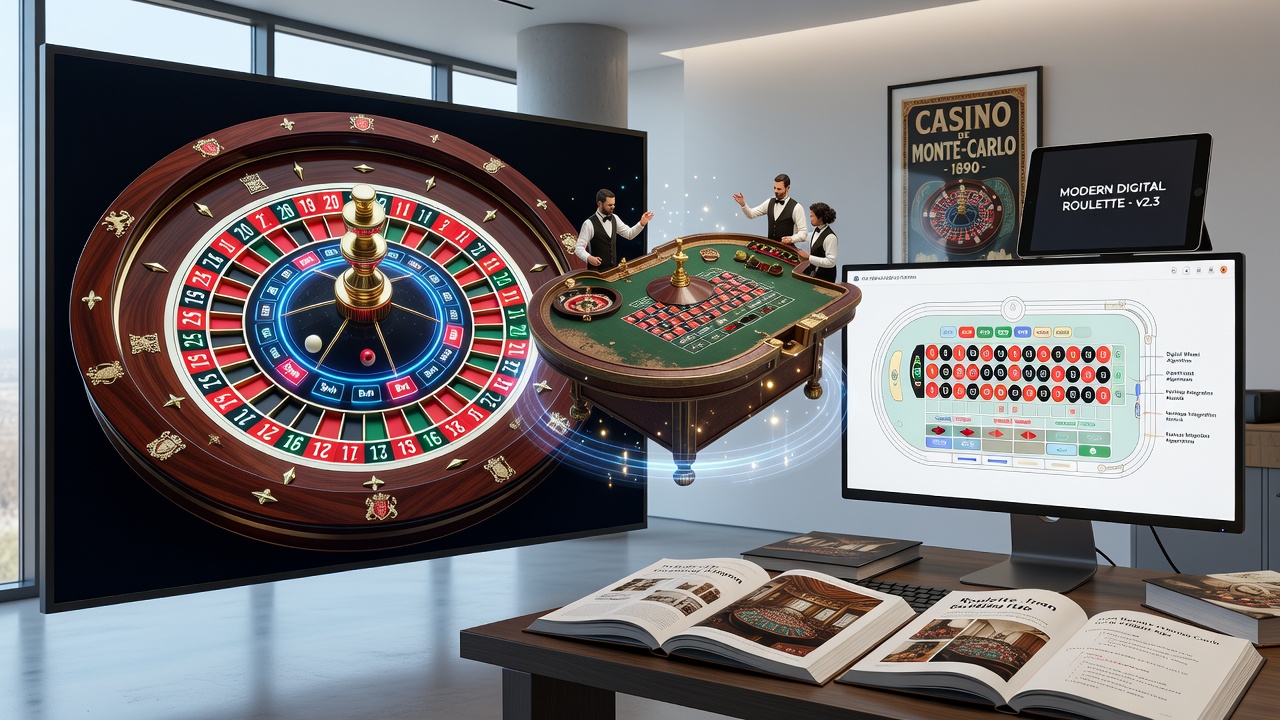
Live dealer streams further extend these traditions by employing croupiers trained in European dealing styles, complete with verbal announcements and chip-handling techniques that replicate 19th-century practices. Platform analytics indicate sessions featuring these elements maintain longer engagement durations compared to simplified variants, as the inherited rituals create recognizable flow states for users familiar with historical accounts.
Interface Elements Rooted in Past Practices
Digital roulette grids display the same number arrangements and color sequences used in French and German casinos, with developers adding subtle animations that echo the physical ball trajectory observed in period equipment. Color palettes often reference the deep greens and golds associated with Monte Carlo furnishings, applied through modern rendering techniques without altering functional layouts. Researchers at institutions studying gambling technology have documented how these aesthetic choices improve recognition of betting options among users transitioning from physical to virtual environments.
Multiplayer lobbies in digital spaces replicate the social dynamics once found around European tables, where observers tracked outcomes on shared scoreboards now rendered as digital history panels. These features draw from archival descriptions of casino atmospheres in cities like Nice and Wiesbaden, where community monitoring of wheel results formed part of the experience.
Adaptations in Mobile and Cross-Platform Designs
Portable versions maintain European rule fidelity through compact wheel representations that expand on tap, preserving pocket proportions established in the original mechanical designs. Studies from Canadian Gaming Association publications highlight how regional operators incorporate these elements to meet player expectations shaped by exposure to European variants via streaming and international platforms. June 2026 updates across several providers introduced enhanced zoom functions on number sectors, allowing closer inspection of details that historically appeared on ivory or wooden wheels.
Sound design frequently layers subtle ambient recordings reminiscent of European gaming halls, including faint chip clinks and murmured conversations calibrated to match documented acoustics from preserved casino sites. Such layers operate alongside core mechanics without interfering with the probability models rooted in Pascal-era mathematics.
Conclusion
Historical European casino traditions continue to define digital roulette through preserved mechanical specifications, rule frameworks, and visual conventions that software teams translate into code and graphics. Regulatory oversight in multiple regions ensures these elements remain intact even as delivery methods shift to online and mobile formats. Figures reveal sustained player preference for variants carrying these inherited characteristics, demonstrating how 18th- and 19th-century innovations underpin contemporary game architecture across global platforms.