Seasonal Fluctuations in Roulette Game Selections Among Frequent Digital Platform Users
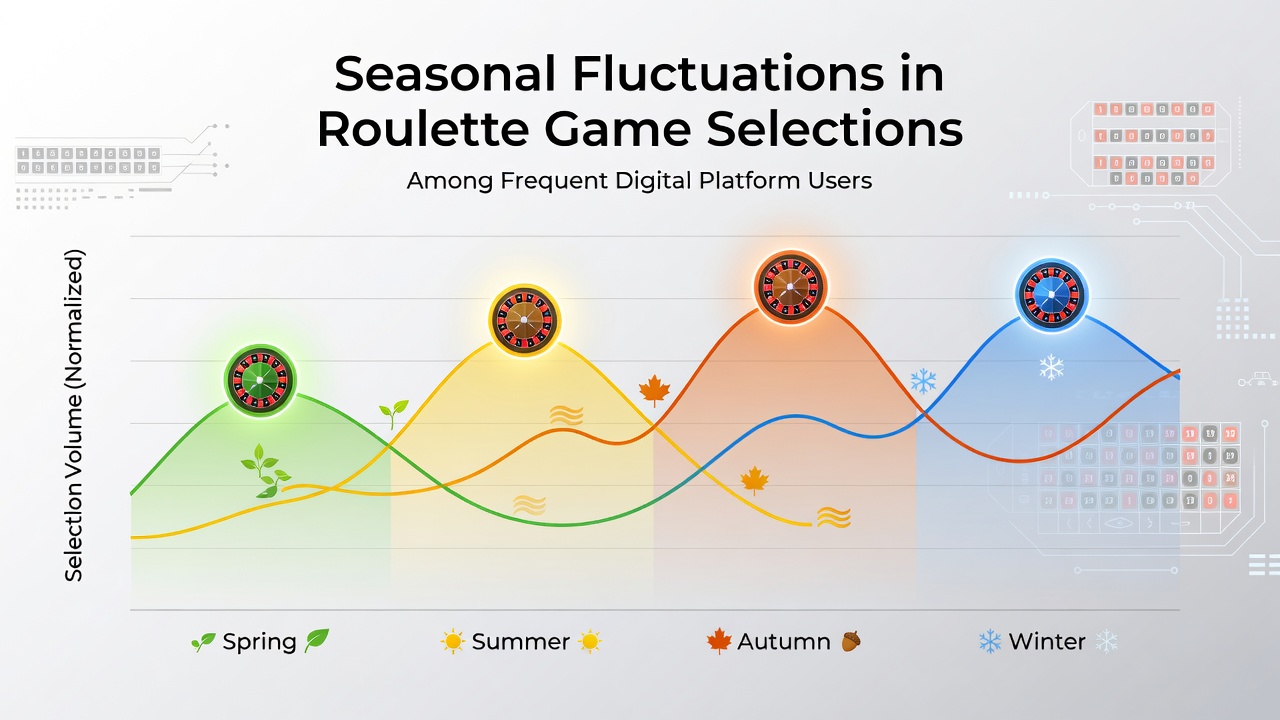
Digital roulette platforms record measurable shifts in game selections and betting patterns that align with calendar seasons, according to aggregated user data tracked across multiple operators through early 2026. Frequent players demonstrate consistent preferences for certain wheel variants and wager types during winter months compared with summer periods, while transitional seasons like spring and fall produce distinct intermediate behaviors. These patterns emerge from platform analytics that log session durations, game choices, and bet distributions without identifying individual accounts.
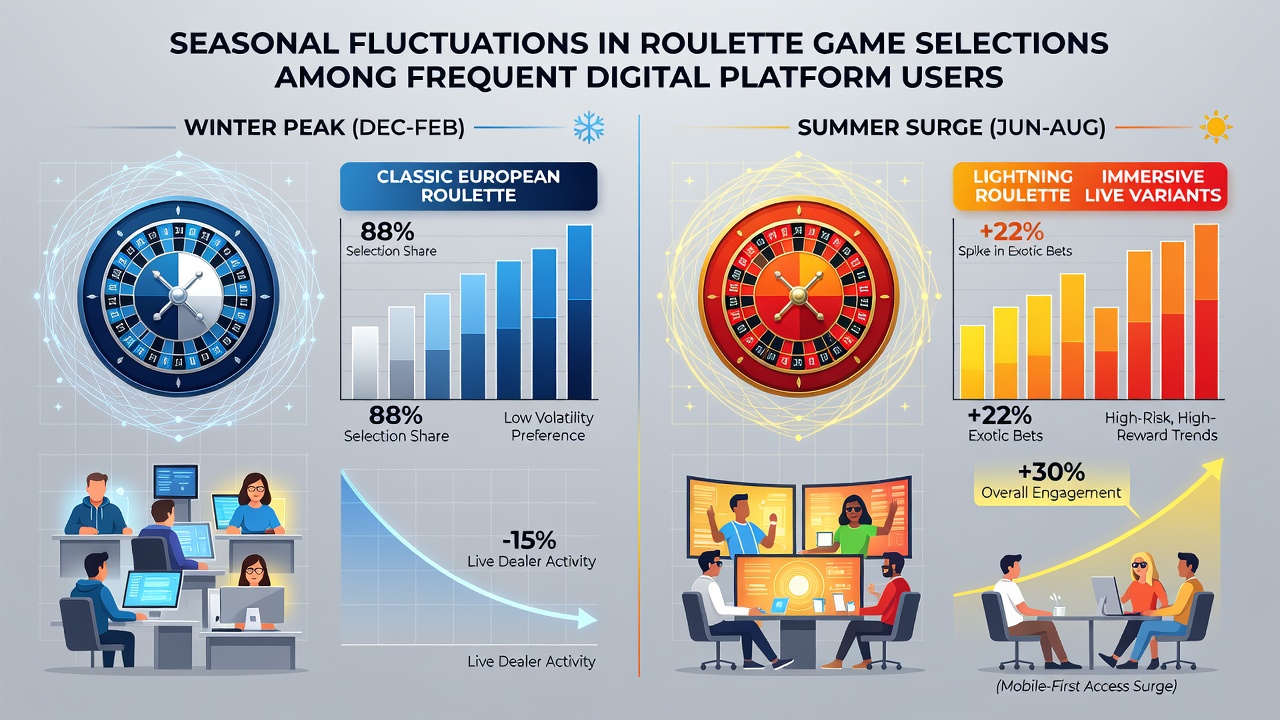
Winter months from December through February show elevated selections of European roulette variants among regular users, with data indicating a 12 to 18 percent increase in sessions featuring the single-zero wheel. Players shift toward even-money bets such as red-black and odd-even during this period, a trend that holds across North American and European server logs. The same datasets reveal reduced engagement with American double-zero wheels until temperatures rise again in later months.
Documented Patterns from Platform Analytics
Platform operators collect anonymized telemetry that captures these changes at scale. Records from 2024 through the first half of 2026 illustrate how selections evolve alongside external events such as holiday schedules and regional weather reports. One consistent observation involves increased use of French roulette rules, including la partage, during December and January when session volumes peak around major calendar holidays.
Spring months bring a measurable uptick in players experimenting with inside bets and column wagers. Analytics show that selections of straight-up numbers rise by roughly 8 percent between March and May compared with winter baselines. This shift coincides with longer daylight hours in many regions and appears independent of promotional campaigns run by the platforms themselves.
Influences Behind the Variations
Multiple external factors correlate with the observed fluctuations. Regulatory filings submitted to bodies such as the New Jersey Division of Gaming Enforcement document how time-zone aligned traffic patterns affect game menus displayed to users. When daylight saving changes occur, evening peak hours shift and coincide with different bet-type distributions on the same accounts.
Weather data cross-referenced with login timestamps further clarifies the picture. Colder periods produce longer average session lengths on mobile applications, during which users gravitate toward slower-paced European wheels. Warmer months show shorter, more frequent logins with higher proportions of American wheel selections, particularly on weekends.
Regional and Demographic Observations
Geographic differences appear in the datasets. Users accessing servers from northern latitudes exhibit stronger winter preferences for single-zero wheels than those in equatorial zones. Demographic breakdowns indicate that players aged 25 to 40 demonstrate the most pronounced seasonal swings, while older cohorts maintain steadier selections year-round.
June 2026 data, released in preliminary operator summaries, shows an early summer acceleration in multi-wheel formats and quick-spin options. These selections rose 15 percent above May figures on several major platforms, aligning with school vacation periods in multiple countries. The same reports note that frequent users who maintain accounts across multiple sites replicate these patterns consistently rather than varying behavior by platform.
Statistical Correlations and Research Sources
Independent researchers examining longitudinal datasets have identified links between seasonal affective patterns and wager conservatism. Although causation remains unproven, the correlations match findings published by the Ontario Lottery and Gaming Corporation in their annual digital gaming reviews. Those reports track aggregate selections without attributing motives to players.
Academic studies from institutions monitoring interactive gambling behavior reinforce the platform observations. One analysis covering 2023 to mid-2026 found that bet-size volatility decreases during winter for frequent users while increasing modestly in summer months. The study attributes part of the variance to changes in disposable time rather than financial factors.
Conclusion
Seasonal fluctuations in roulette selections continue to appear across digital platforms as operators accumulate additional quarters of telemetry. The patterns documented through June 2026 remain consistent with prior years yet show slight amplification during periods of regulatory stability. Continued monitoring by industry groups and academic teams will clarify whether these cycles persist or evolve with new game formats and user-interface changes.