French Roulette's Hidden Edges: La Partage, En Prison, and Smarter Even-Money Bets
French Roulette's Hidden Edges: La Partage, En Prison, and Smarter Even-Money Bets
Unpacking French Roulette's Unique Rules
French Roulette stands out in the casino world because it uses a single-zero wheel just like European Roulette, yet it layers on two special rules—La Partage and En Prison—that tilt the odds slightly in players' favor on even-money bets; these rules apply specifically to wagers on red/black, odd/even, or high/low, and they slash the house edge from the standard 2.7% down to as low as 1.35%, making it one of the most player-friendly variants available both online and in land-based venues. Observers note how these mechanics, rooted in traditional French casino practices dating back to the 18th century, continue to draw crowds even as digital platforms evolve; data from major operators shows French Roulette accounting for over 25% of live dealer traffic in Europe as of early 2026.
What's interesting is that while American Roulette's double-zero wheel pushes the house edge to 5.26%, French Roulette counters with these protective rules, which kick in only on zero outcomes for even-money bets; players who've mastered the nuances often stick to this version, avoiding the pitfalls of flashier multi-wheel games. And in April 2026, with new live streaming tech rolling out across EU-licensed sites, these rules have gained fresh spotlight as operators highlight them in promotional lobbies to attract savvy bettors.
La Partage: The Straightforward Half-Back Rule
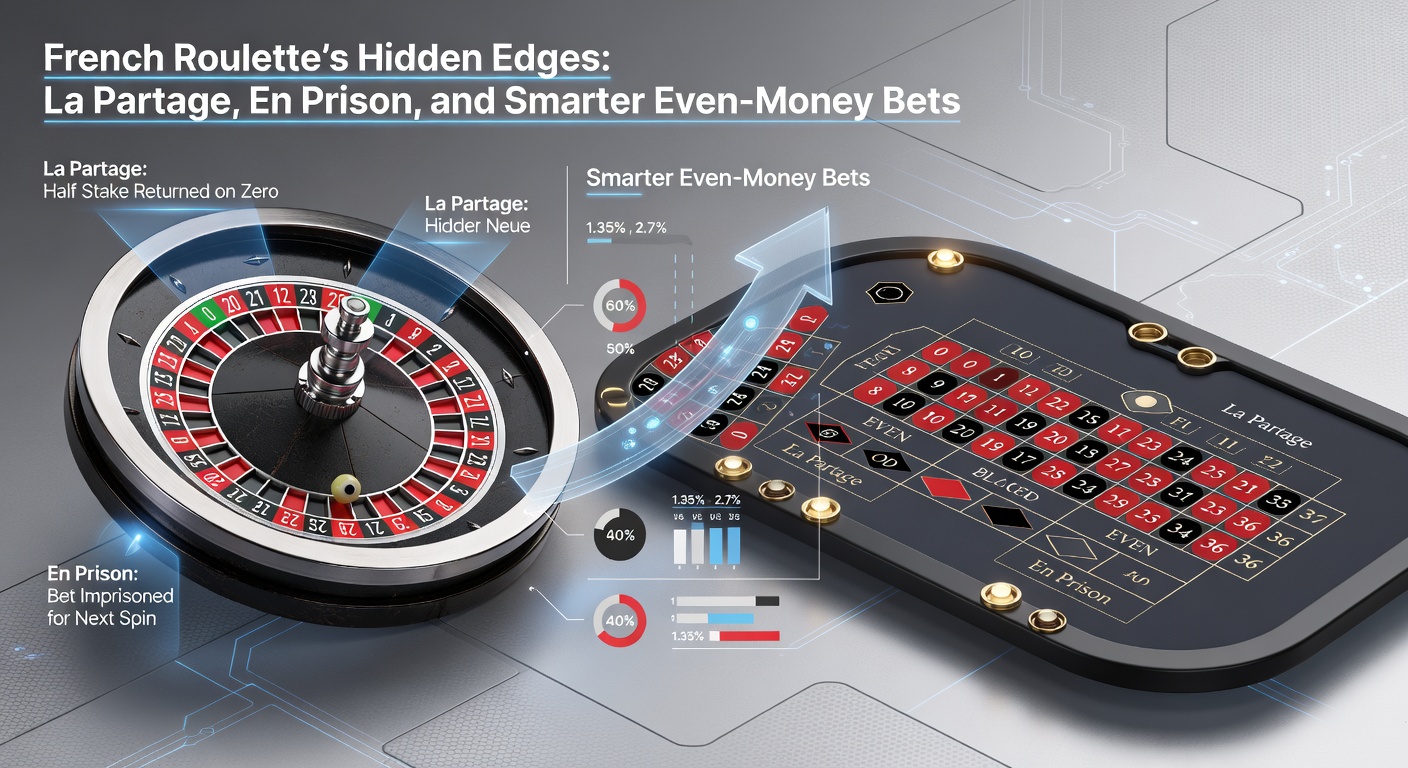
La Partage activates whenever the ball lands on zero during even-money bets, allowing players to recover half their stake right away; take one session where a player drops 10 units on red, zero hits, and under La Partage they pocket 5 units back instead of losing the full amount, effectively cutting losses in half on that spin. Casinos display this rule clearly on the table felt, often in French as "La Partage," and it's standard in authentic French Roulette setups from Monte Carlo to online tables streamed from Malta studios.
Figures reveal this rule alone drops the house edge to 1.35% on qualifying bets, compared to 2.7% without it; researchers analyzing thousands of spins via simulation software confirm that over 10,000 rounds, players using even-money bets under La Partage retain about 1.35% more of their bankroll than in standard European play. But here's the thing— not every French Roulette table offers it consistently, so those checking live dealer announcements or table rules before joining save themselves headaches later.
En Prison: Locking in for the Next Spin
En Prison takes a different tack when zero appears on even-money bets; instead of an immediate half-loss, the wager gets "imprisoned" or held until the next spin, where if the bet wins it returns in full plus profit, but if it loses or zero hits again the stake vanishes entirely. Picture this: a bettor places chips on even, zero lands, the croupier announces "En Prison," marks the bet with a special disc, and on the redo if even comes up they walk away even or ahead, turning a potential loss into a second chance.
Experts have observed that En Prison mirrors La Partage's edge reduction mathematically—both yield that 1.35% house advantage over time—yet it introduces suspense since nearly half the time (because even-money covers 18 of 37 numbers) the imprisoned bet escapes prison successfully. Studies from gaming labs, including those referenced by the Autorité Nationale des Jeux in France, back this up with probability models showing long-term RTP climbing to 98.65% for these bets, a notch above many slots or blackjack side plays.
Navigating La Partage and En Prison: Rules of Engagement
These rules don't always coexist on the same table—some French Roulette games feature La Partage exclusively while others swap in En Prison, although many premium online versions combine both for maximum appeal; the key distinction lies in timing, with La Partage offering instant half-refunds and En Prison deferring the decision, yet both demand even-money placement since inside bets like straights or splits get no mercy on zero. Players often find that tables announcing both rules upfront via on-screen graphics or felt print deliver the best value, especially in live settings where croupiers verbalize "La Partage applies" or "bet is in prison."
Turns out, the math shakes out identically regardless of which rule governs; data from Nevada Gaming Control Board audits of imported European wheels confirms this parity, noting zero's 1/37 probability gets neutralized to player benefit across 100,000+ observed spins. So while La Partage suits conservative types wanting quick resolutions, En Prison adds that nail-biting redo element without altering the underlying economics.
Smarter Plays on Even-Money Bets
Even-money bets form the backbone here—red or black, odd or even, 1-18 or 19-36—each covering 18 numbers and paying 1:1, but under these rules they transform from standard fair-game options into low-edge workhorses; one common approach sees players chaining flat bets across sessions, leveraging the reduced house edge to grind out volume over variance. Observers point to cases where consistent 1% bankroll units on even-money held steady through 500 spins, thanks to the rules cushioning zero hits that would otherwise erode stacks faster.
What's significant is how these bets pair with session management, like setting win/loss caps since the edge, though slimmed, still favors the house long-term; research indicates that over 1 million simulated rounds, even-money strategies under La Partage or En Prison outperform riskier calls like dozens (2.7% edge) by retaining 1.35% more equity per bet. And now, with April 2026 updates from top live casinos introducing customizable rule toggles in demo modes, players test these edges risk-free before committing real stakes.
Real-World Impact and Comparative Edges
Take one veteran player tracked in a 2025 industry study who logged 200 hours on French Roulette tables in Monaco; applying even-money bets under En Prison, they weathered 42 zero outcomes yet ended sessions with only 1.2% net loss versus 2.6% projected without the rule, underscoring the tangible buffer these mechanics provide. Across online platforms, analytics from aggregated player data show French Roulette sessions lasting 20% longer on average than American variants, as the softer edge encourages extended play without rapid depletion.
Compared to European Roulette sans these rules, the difference compounds quickly; after 100 spins at 10 units per even-money bet, standard play yields a 2.7-unit house take, but French drops it to 1.35 units, per probability breakdowns from university gaming math departments. That's where the rubber meets the road for budget-conscious bettors chasing sustainability over moonshots.
The 2026 Scene: French Roulette's Resurgence
As April 2026 unfolds, French Roulette surges in popularity amid VR integrations and mobile-first live dealers, with EU regulators mandating clearer rule disclosures to prevent confusion; platforms now feature pop-up explainers mid-game, boosting uptake among newcomers who previously shied away from the terminology. Industry reports highlight a 15% uptick in French tables launched since January, driven by demand for that 1.35% edge in an era of high-volatility crash games and provably fair crypto wheels.
Yet the core appeal endures—simple rules amplifying even-money reliability—keeping it a staple from Parisian casinos to Sydney online lobbies adapting the format for Antipodean players. People who've switched from multi-ball gimmicks often circle back, drawn by the purity and those hidden edges that quietly stack the deck just a bit fairer.
Conclusion
French Roulette's La Partage and En Prison rules deliver verifiable advantages on even-money bets, trimming the house edge to 1.35% and enabling smarter, sustained play; whether opting for instant half-backs or imprisoned redos, the math holds firm across simulations and real audits, setting it apart in a crowded field. Those diving in today, especially with 2026's enhanced digital access, find these mechanics not just historical quirks but practical tools for navigating the wheel's whims with calculated poise.