Exploring Certification Standards for Random Number Generators in Roulette Variants Optimized for Mobile Environments
 Certification standards for random number generators form the backbone of fairness verification across digital roulette platforms, and mobile variants introduce specific testing protocols because of device variability along with network conditions. Observers note that regulators require independent laboratories to evaluate RNG outputs against statistical benchmarks before any game reaches players on smartphones or tablets, and these evaluations cover both European and American wheel formats adapted for portable screens. Testing begins with source code review where laboratories examine teh algorithms that produce sequences for ball landing positions, and this step confirms that no predictable patterns exist in the generation process. Data from millions of simulated spins gets analyzed for uniformity and independence, while mobile-specific factors such as battery state or touch input latency receive separate scrutiny to ensure they never influence results.
Key Certification Bodies and Their Methodologies
Several laboratories hold international recognition for RNG evaluation, and Gaming Laboratories International applies its GLI-19 standard that outlines requirements for electronic random number generators used in gaming equipment. iTech Labs, an Australia-based firm, conducts similar assessments under its own protocols that align with multiple jurisdictional rules, and the firm publishes summaries of approved products on its site.
Another source comes from the Nevada Gaming Control Board which maintains its own technical standards for RNG integrity in both land-based and remote systems, and operators seeking approval in that state must submit mobile roulette variants for on-device testing that accounts for operating system differences across iOS and Android builds.
Mobile Optimization Challenges in RNG Validation
Developers optimize roulette variants for smaller interfaces by adjusting wheel rendering and bet placement sequences, yet these changes cannot alter the underlying RNG output. Laboratories therefore retest the generator after each interface modification to confirm that visual adjustments leave probability distributions untouched, and this process often repeats when new device models enter the market.
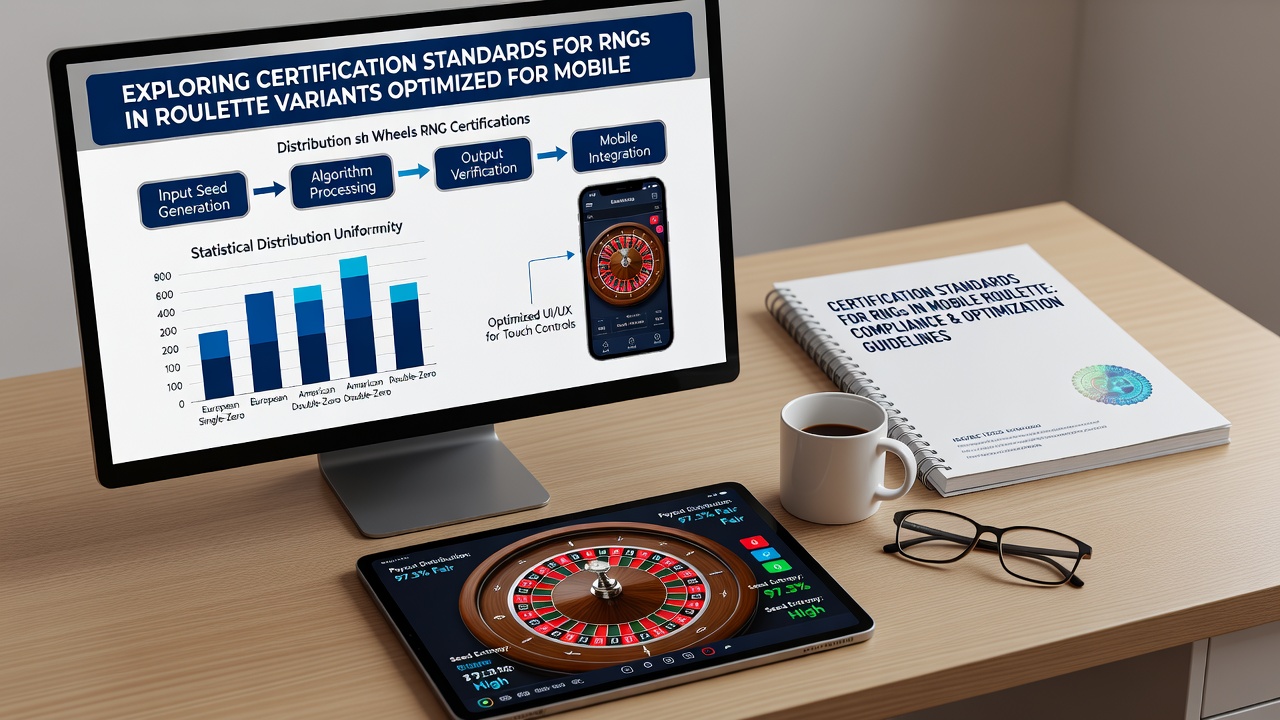
Network interruptions create another layer of complexity because a dropped connection during a spin must not allow result manipulation upon reconnection. Certification protocols require demonstration that the RNG commits to an outcome before transmission occurs, and this commitment gets stored server-side in encrypted logs that auditors can later verify.
Standards Evolution Through Mid-2026
Regulatory updates released in June 2026 introduced additional requirements for continuous RNG monitoring on live mobile deployments, and these rules mandate real-time statistical sampling alongside traditional pre-launch evaluations. Operators must now integrate logging mechanisms that transmit anonymized output samples to oversight portals without compromising player data.
Multi-jurisdictional operators face the added task of satisfying both North American and European criteria simultaneously, and laboratories have responded by developing unified test suites that address the strictest elements from each region. Research indicates that this convergence reduces redundant testing cycles while maintaining rigorous statistical thresholds.
Practical Implementation Across Roulette Variants
French, American, and European roulette each carry distinct wheel configurations that require tailored RNG mapping, and certification reports list the exact number of pockets along with corresponding payout structures. Mobile versions add further parameters such as gesture-based betting that must remain decoupled from the random sequence generator itself.
Case studies from approved platforms show that laboratories typically run between 100 million and one billion test cycles before granting certification, and any deviation beyond established confidence intervals triggers a full code review. Those who've studied this process note that even minor library updates in the mobile operating system can necessitate re-certification when those libraries handle cryptographic functions.
Conclusion
Certification of RNGs in mobile-optimized roulette continues to evolve alongside device capabilities and regulatory expectations, and the combination of laboratory testing, ongoing monitoring, and jurisdictional alignment ensures consistent fairness across environments. Data from approved systems confirms that properly certified generators maintain statistical integrity regardless of platform constraints.